Can conservation change how the world sees the Strait of Hormuz?
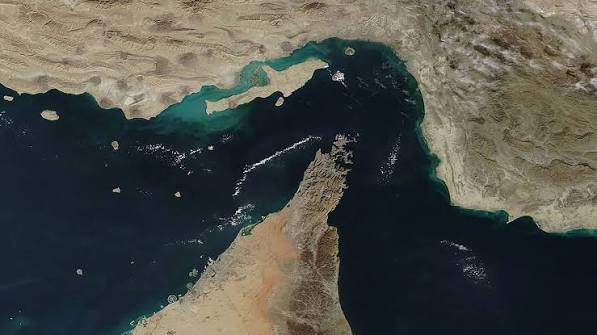
- If seen only as an oil corridor, the main question becomes how to keep energy moving, but this overlooks a much more important reality, that the Strait of Hormuz is biologically rich yet fragile.
- Featuring mangroves, seabird colonies, coral reefs, turtle nesting beaches and islands, it is a narrow ecological corridor through which the Persian Gulf exchanges water between the Gulf of Oman and Indian Ocean, connecting nature across borders.
- “If it is also seen as an ecological corridor, another question enters the room: how much ecological capital is the region willing to risk while trying to protect its political and economic capital?” a new op-ed asks.
- This article is a commentary. The views expressed are those of the author, not necessarily of Mongabay.
In recent months, the Strait of Hormuz has again been described in the language the world knows best: Oil, tankers, naval risk, energy security and war. That is understandable. Around one-fifth of global oil and liquefied natural gas shipments normally move through this narrow passage between Iran and Oman. When Hormuz is threatened, markets react and governments calculate.
But this is only one map of the strait. Conservation offers another.
The Strait of Hormuz is not only an oil chokepoint. It is an ecological corridor: The narrow mouth through which the Persian Gulf exchanges water with the Gulf of Oman and the wider Indian Ocean, and through which islands, mangroves, seabird colonies, coral reefs, turtle nesting beaches and coastal communities are connected across borders.

This way of seeing Hormuz matters now because recent oil-related reports have not pointed to empty water. They have pointed toward real places: Shidvar, an uninhabited Ramsar island in Lavan, Iran, where damage to nearby oil infrastructure can quickly become a threat to a breeding ground for more than 80,000 terns each year; Qeshm and the Hara mangrove forests, the largest mangrove system in the Persian Gulf and also a Ramsar site; Kharg Island, and also small ports, fishing grounds and coastal waters where human life and wildlife are not easily separated.
The full biological impact is still unclear but the geography already tells us enough: In the Persian Gulf, oil pollution does not enter a blank space. It enters a living seascape, where a slick that begins as damage to infrastructure can become a seabird problem, a fisheries problem, a water problem, a mangrove problem, a turtle problem, and a loss of trust between coastal people and the sea itself.
The sea itself makes this danger last longer than the war that creates it. The Persian Gulf is shallow, semi-enclosed and connected to the open ocean only through Hormuz. Its average depth is 60 to 100 meters (200 to 330 feet), and the strait itself is only about 50 kilometers wide (31 miles). In summer, surface waters can exceed 36 degrees Celsius (nearly 97 degrees F), salinity rises far above normal ocean levels, and water exchange is slow. In parts of the gulf, flushing can take years.
The region has seen what this means: During the 1991 Gulf War, an estimated 7 million barrels of oil were intentionally released, contaminating roughly 700 kilometers (about 435 miles) of coastline from Kuwait through Saudi Arabia and reaching as far as Qatar. For years afterward, biodiversity was still living inside a conflict that had already disappeared from the headlines. Oil lingered in sediments, coated intertidal habitats and became part of the ecological memory of the gulf.
This is why Hormuz should be seen not only as a passage for energy, but as a passage of vulnerability. What moves through it is not only crude oil or liquefied natural gas (LNG). Water moves. Heat moves. Pollutants move. Animals move. Responsibility moves.
For years, scientists and conservationists have collected evidence showing that the gulf’s living systems do not follow political boundaries. An Egyptian vulture satellite-tagged in Oman crossed the Strait of Hormuz into Iran. Terns ringed (“banded” for later identification) on Iranian islands in the northern Persian Gulf have later been recovered far away, including in India, while other records show movement between Iranian Gulf islands. Hawksbill turtles nesting in Iran, Oman, Qatar and the UAE have been tracked to shared foraging grounds in the southwestern gulf, around waters used by Qatar, Saudi Arabia and the UAE.

A turtle does not know whether it is crossing from one state’s conservation success into another state’s pollution risk. Neither does a seabird, a current, or an oil slick.
Yet, crisis maps rarely show this. We map shipping lanes, naval deployments, oil terminals and pipelines with extraordinary precision. We track barrels, not breeding colonies. We describe the strait as strategic because oil passes through it, but not because life passes through it.
The money matters, too. Dubai has announced major investment in the redevelopment of Ras Al Khor Wildlife Sanctuary, with figures reported at about $177 million. Oman’s Blue Carbon program aims to plant 100 million mangroves, with an estimated carbon-credit value of about $150 million. Saudi Arabia has pledged to protect 30% of its land and sea by 2030. These commitments differ in scale and implementation, but they show that the gulf has already put money, policy and institutional language behind the idea that coastal and marine life is valuable.
This is the contradiction war exposes: The region invests in ecological capital, while accepting risks that can destroy it. Mangroves are planted, turtle beaches are monitored and wetlands are listed, while the same sea is treated as if damage can be contained by borders.
Conservation should not arrive only after the black waves, dead birds or coated mangrove roots appear. By then, it has already accepted the terms of the security narrative: Late, reactive, and useful mainly as a witness to damage rather than as a force that changes how risk is understood.
The data are not new. The movements of turtles, birds and water have been documented for years. The vulnerability of the gulf has been known for decades. What is new is the political visibility of the Hormuz Strait, which is again being discussed in ministries, media rooms, security briefings and energy markets. That makes this a moment for conservationists, protected-area managers, marine scientists and environmental institutions to speak more clearly.
This is not a romantic argument. It is not a naive call to turn one of the world’s most militarized waterways into a protected area overnight. It is a recognition that what political and economic actors are now rediscovering through crisis, that Hormuz holds shared interests too large for any one country to ignore, and has long been visible via conservation.
The evidence was there before this war, but what differed was the volume of the voice. This moment should be used to give that quieter ecological knowledge more power: Hormuz should be treated as a shared ecological corridor in risk assessments, oil spill preparedness, satellite monitoring, wildlife tracking and regional conservation planning.

Security maps should be overlaid with ecological maps like turtle routes, seabird colonies, mangroves, coral reefs, seagrass beds, desalination plant intakes, fishing grounds and coastal communities. Ecological early-warning systems should be discussed with the same seriousness as energy early-warning systems.
This would not solve the conflict, but it would change what the conflict is allowed to ignore.
If Hormuz is seen only as an oil corridor, the main question becomes how to keep energy moving. If it is also seen as an ecological corridor, another question enters the room: How much ecological capital is the region willing to risk while trying to protect its political and economic capital?
That is the deeper absurdity. Money is spent to build ecological value like mangroves, sanctuaries, monitoring programs, protected wetlands, turtle nesting beaches, and coral research, but then conflict risks spending another kind of capital to damage it. And afterward, if the damage is severe enough, more money will be needed to restore what may not fully return.
Restoration is not a reset button. It can plant seedlings, fund monitoring and clean visible oil. It cannot always recover poisoned sediment, a failed breeding season, a damaged coral community, or trust between coastal people and the sea that sustains them.
This is why conservation should change how the world sees the Strait of Hormuz. Hormuz is strategic for energy, yes. But it is also strategic for life, and life is the one form of capital the region cannot simply buy back.
Iman Ebrahimi is an Iranian conservationist, winner of a Ramsar Wetland Conservation Award for Young Wetland Champions in 2025, and founder of AvayeBoom Bird Conservation Society, one of his nation’s leading bird conservation NGOs.
Banner image: Moray eel, Daymaniyat Islands, Oman. Image by Warren Baverstock / Ocean Image Bank.