Launch of the New Version of the Family Physician Program with Financial and Electronic Reforms
Iran’s Ministry of Health has begun rolling out a revised version of the Family Physician Program and Referral System in five pilot counties, introducing major financial reforms and enhanced electronic infrastructure aimed at improving chronic disease control, transparency in payments, and integration across healthcare levels.
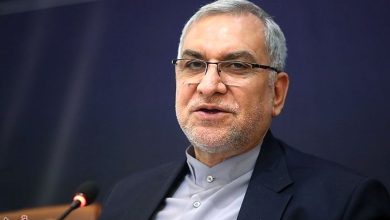
The Deputy Minister for Public Health at Iran’s Ministry of Health, Treatment and Medical Education announced the start of the implementation of the new version of the Family Physician Program and the Referral System in five leading counties across the country. He stated that this revised version has been designed with the aim of reforming financial structures, upgrading electronic infrastructure, and integrating health services.
According to Salamat News, quoting the Ministry of Health, Alireza Raeisi said during a coordination meeting on the Family Physician Program and the Referral System that controlling non-communicable diseases such as diabetes and hypertension is among the most challenging health indicators. He added that two key indicators—diabetes and hypertension control—are directly the responsibility of health authorities and can only be achieved through fundamental changes in service delivery, patient identification, monitoring, and disease control.
He noted that the counties of Aq Qala, Marand, Khodabandeh, Qaenat, and Babol have been selected as pilot networks for implementing the new version. Raeisi added that field visits, numerous expert meetings, and active cooperation with basic health insurance organizations made it possible to prepare Version 03 of the program. According to him, these five networks were chosen to serve as models and to avoid repeating past shortcomings.
The Deputy Minister emphasized that one of the most important lessons learned from previous experiences was the need to separate payments to physicians from those to community health workers, noting that 70 percent of past problems stemmed from payment dependency. In the new model, payments will be transferred directly to the bank accounts of physicians and health workers in order to reduce misuse and dissatisfaction.
Raeisi explained that the payment system in Version 03 consists of three components: fixed payments, payments based on logical and population-based indicators, and value-based payments, which include performance-based compensation.
He stressed that electronic infrastructure is a key prerequisite for implementing Version 03, stating that it includes three main components—appointment scheduling, referral, and feedback—which must fully connect primary, secondary, and tertiary levels of care to ensure accurate referral pathways.
He also referred to the existence of electronic dashboards for monitoring the number of prescriptions, referrals, specialties, and county-level performance, adding that network managers must review and monitor these dashboards on a daily basis.
Three-Phase Implementation Covering 59 Counties
Regarding the implementation timeline, Raeisi said that in addition to the five pilot counties, 59 other counties will be incorporated into the program in three phases: 20 counties in the first phase, 20 in the second, and 19 in the third.
He explained that under the new model, insurance organizations will contract with health networks, and the networks in turn will contract with healthcare teams. This approach is intended to resolve problems associated with direct contracts between insurers and physicians, which previously led to misuse and dissatisfaction. He added that in two of the five pilot counties, private-sector participation will also be possible—subject to insurers’ willingness—provided that physician capitation or payments are separated from those of health workers.
Referring to the importance of Babol County, Raeisi said that Babol represents the reform of the program in provinces where the previous version had already been implemented. Success in Babol, he noted, would lead to reforms in Mazandaran Province and serve as a model for Fars Province.
He concluded by stating that quality indicators of the Family Physician Program include control of chronic diseases, rational referrals, and public satisfaction. He also emphasized that the use of an SMS-based service confirmation system will help prevent the registration of unreal or unprovided services.